


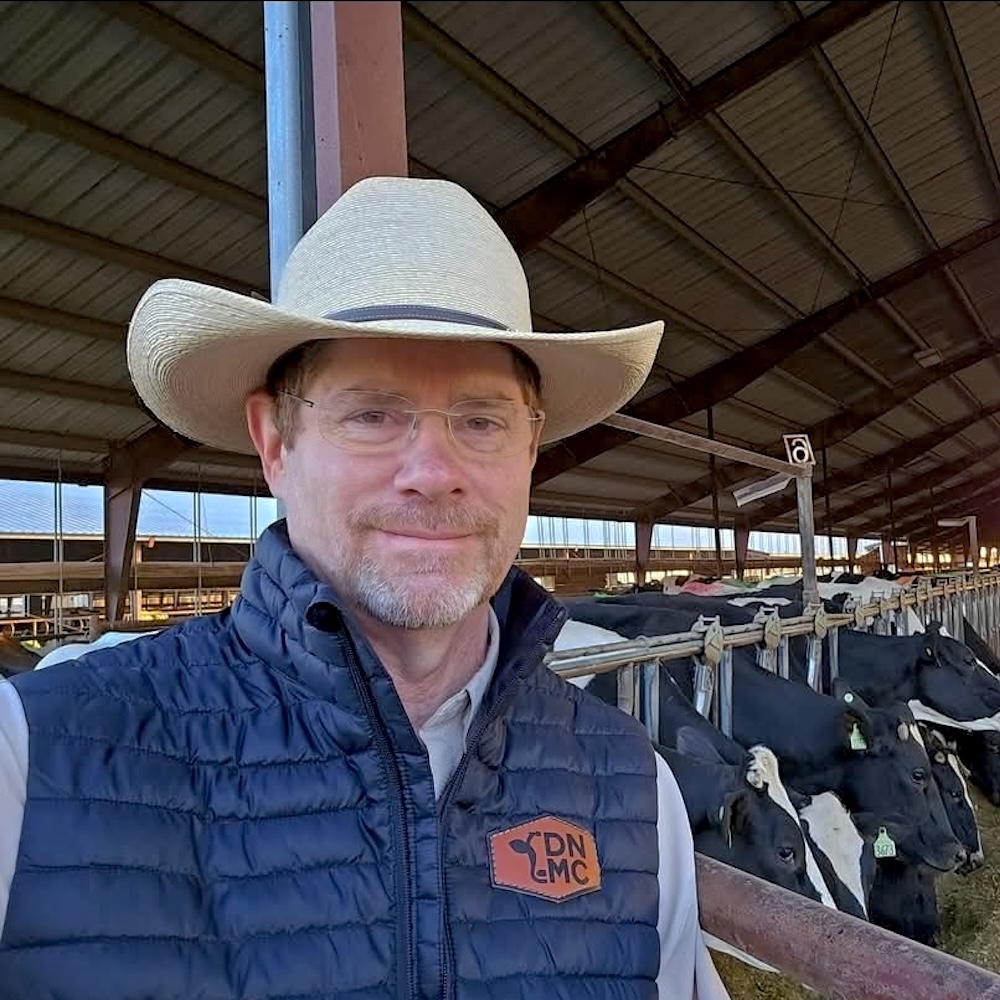


I wrote “Will AI replace the dairy nutritionist?” for the January 5, 2023, issue of Hoard’s Dairyman Intel posing the question of if my job as a nutritionist be replaced by artificial intelligence (AI). In today’s fast-paced world, what I wrote three and a half years ago might as well have been written three and a half decades ago.
I remember posting that article on social media. I was curious about what my peers’ response might be. Would it be different for nutritionists and industry players compared to animal owners who certainly have a legitimate opinion on this topic? After all, their animals and bottom lines will be the most at risk. The responses were mixed, but leaning toward skepticism.
I have since had hundreds of conversations with nutritionists, producers, and other individuals adjacent to this topic. The interest in and attention given is still mostly a collective “I’m not sure.” By now, every nutritionist has probably had a client either ask about AI or mention what they learned when they let Chat GPT look at one of their diets. I can say one thing for sure, and I will use the words of Bob Dylan, “The times they are a-changin’.”
In my 2023 article, I asked what the correct response to this is. I am still working hard on that question. I am in no way an expert in AI, but I am learning just enough to see how this tool will intersect with the sacred task of building diets for animals.
I found a March 2026 article on a national poll by Quinnipiac University, and I suggest you read it to see how your personal bias on this topic falls compared to your fellow Americans. The poll found that 70% of respondents feel that AI will replace many jobs — while only 30% think their own job is truly at risk. This is a strong optimism-bias gap and confirms my suspicion that most people think their jobs are more complicated, important, or embodied than average. Would I put myself in that group, and if so, is it at my own peril?
I have worked to stay out of the 30% of respondents in the Quinnipiac poll that feel their jobs are too “something” to be replaced by AI. Instead, it seems smart to focus on how we can work with the new technological options available. How can I use AI to help me achieve what has been my goal for 35 years now: How can we feed cows better? Here, though, is where the more thoughtful divide may occur.
The current approach to balancing dairy rations is based on the use of mechanistic or deterministic hybrid models. The predominant example of this is the Cornell Net Carbohydrate and Protein System (CNCPS). These models attempt to utilize the body of information gleaned from more than a century of research in how we best turn nutrients into food for people. The term “net” is critical in the name and the purpose of the model. It considers numerous biological systems in the cow to predict the actual nutrients that will be available for the cow. Though far from perfect, the details and nuances involved in today’s nutrition models are impressive. Some of this information is in the public domain and part of it is proprietary. Most of it is based on research results that are published in peer-reviewed journals and a lesser amount from private research. Is it perfect? For sure not. It is useful and getting better.
One of my concerns is what we stand to lose in the midst of this change. I want to protect the biology in the current models from the algorithms and large language models (LLM). This isn’t an overly technical statement, and I want to always remember that the current biology is not 100% correct either. Adding to that, the animal that we are feeding is in constant change as well. So, even the target is moving. I expect AI tools can help us boost the rate of learning in this dynamic situation and that the best path forward is teamwork between our current mechanistic or deterministic hybrid models and newer tools driven by AI.
We should remember that LLMs don’t do math like mechanistic models do. If you are not convinced about this, you can ask any AI tool and it will tell you. Occasional AI hallucination is real and not a good fit for ration formulation. We should also remember that the current commercially available models have linear and nonlinear optimizers included that use algorithms and an iterative solution system that helps arrive at the “best” solution to meet the goals stated by the user. This already allows the computer to be smarter than the user by utilizing a complicated mathematical process. Can this be enhanced by integrating AI somehow? Perhaps it can, and I am open to learning more,but it won’t replace the mechanistic or deterministic model and the attached optimizers.
The race to build AI systems to integrate dairy data and records from the current on- farm information gathering systems is well underway. Utilizing these options to help us better understand the data, see how it connects, and even make suggestions on areas to make improvements is available now. Yes, there are AI-based tools available that will help you evaluate or create your ration. However, I am not convinced that these tools are using the right biological approach.
There are so many ways to utilize new AI-driven tools to help us feed cows better. Not only can we see deeper into dairy data, but we can also significantly speed up the clunky parts of the process by including nearly real-time forage and ingredient analysis details, constantly updated correct pricing information, options to improve the feed mixing process, and ways to reduce human error risk.
Perhaps most importantly, AI tools can connect the current data being created as an opinion of the current ration, compare that to what we had hoped it would be, review the current ration, and even make suggestions for ways to best build the next ration. This is where I want to use the current mechanistic models to respect every detail of available mechanistic biological equations.
We have put our trust in and give great responsibility to the owners of the current models to keep them up to date and as correct as possible. Maybe AI can help with that process. But can AI sort through the abundance of published data and be sure to only implement the best studies that were set up correctly, had the right controls, and measured the necessary variables to truly answer questions of biology, metabolism, microbiology, rates, and pools? Every published study is not ready to be included in the biology of the best mechanistic models. At this point, the keepers of the current models do this sorting. It is a critical step. An LLM might just include the results without this necessary discretion.
My suggestion is simple. First, don’t be in the 30% that are probably delusional about how AI can neither replace them nor significantly change the way they do their current jobs. Secondly, utilize AI tools as they emerge to better understand production data on how the current diet is working and lastly, be open to AI-driven tools to combine these two efforts. Then, utilize the current mechanistic models and your good cow-sense to build the next “best ration” you can. Then, start the entire process over again. Advancements in cow-side data collection can make this cycle short but we need to remember that the environment in the rumen does have a lag time that we must consider. Otherwise, we will be constantly chasing our tails.
We will build rations differently going forward. We must take care that we don’t simply use AI to build them quicker, easier with less human cost, and end up with a ration that would have been better if it were built on an ever-improving set of mechanistic models. These models are the ones we have and use now. I am trusting in the keepers of these models to continue the effort to make them better with each new release. If we can accomplish these goals, we can indeed feed cows better in the future with the use of the current and ever-improving mechanistic models and some enhanced AI tools as well.

.jpg)